AI Call Routing Explained
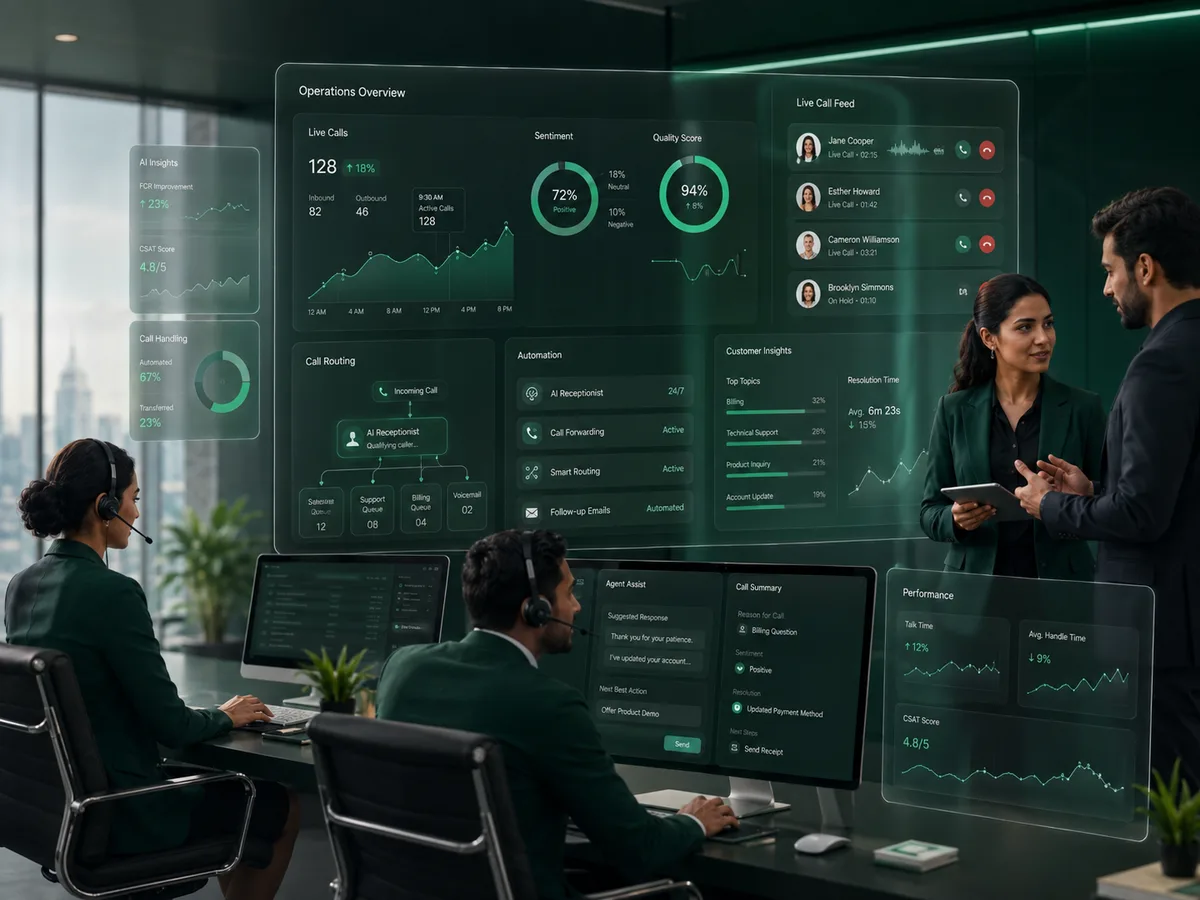
AI call routing uses the meaning of the conversation—not only a keypad selection—to decide how an inbound call should move through the business. The AI captures intent, then applies configured rules for employees, branches, forwarding, or other supported actions.
Why it matters
The goal is a better customer conversation that also moves the business toward a useful next action.
Intent before destination
Understand why the customer is calling before selecting where the call should go.
Business-aware decisions
Routing can reflect employees, branches, service context, and other configured business structure.
Better handoff context
The AI can collect useful information before forwarding so the human receives a more prepared interaction.
Alternative actions
Not every call needs a transfer; some can be answered, scheduled, or otherwise resolved by the AI workflow.
How the workflow works
Capture caller intent
The AI listens to the request and asks follow-up questions when needed.
Match the business rule
The platform maps the intent to the configured employee, branch, workflow, or supported action.
Route, forward, or resolve
The call is sent to the right destination or completed without a transfer when the AI can handle the task.
Routing is different from forwarding
Routing is the decision process: determining where the call should go or what should happen next. Forwarding is one possible action after that decision, where the phone interaction is connected to another number or employee.
An AI system can improve routing by using conversational context before the forwarding step instead of asking the caller to guess which department label fits.
- Intent classification
- Employee selection
- Branch selection
- Call forwarding
- AI resolution without transfer
Multi-branch routing
Organizations with multiple branches need more than a single “sales” or “support” destination. The correct path may depend on location, employee responsibility, or the branch associated with the caller’s request.
Plus0 is designed around structured organizations, which allows routing logic to be built with entities, branches, desks, and employees in mind.
- Branch-aware logic
- Employee-level destinations
- Consistent organizational structure
- Central AI reception with local handoff
Frequently asked questions
Is AI call routing the same as call forwarding?
No. Routing decides the appropriate next step. Forwarding is one action that can be taken after that routing decision.
Can AI route calls without an IVR menu?
Yes. Conversational AI can use the caller’s spoken intent rather than relying only on fixed keypad menus.
Can routing work across multiple branches?
Yes. Plus0 is designed for multi-branch business structures and branch-aware workflows.
Can the AI resolve a call without forwarding it?
Yes, when the configured business information or supported workflow allows the AI to answer the question or complete the action directly.
Related Plus0 pages
Explore the connected capabilities and guides behind the same communication workflow.
Bring AI into your business calls
Explore Plus0 AI reception, telephony, scheduling, and connected communication workflows.