AI Receptionist vs Traditional IVR
Traditional IVR systems organize calls around fixed menus and keypad choices. AI reception organizes the interaction around what the caller says they need, which can create a more flexible path to the correct business action.
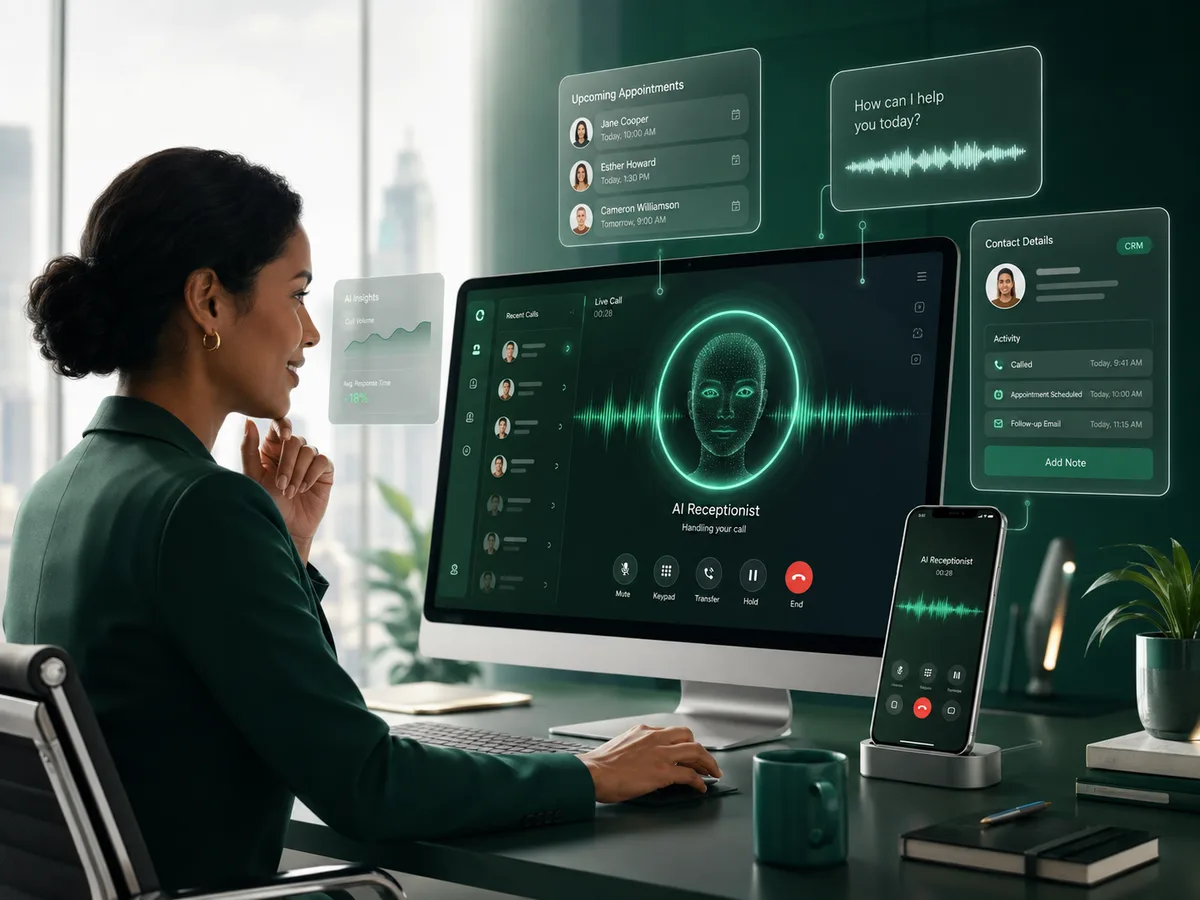
Why it matters
The goal is a better customer conversation that also moves the business toward a useful next action.
Natural-language intent
AI reception can interpret spoken requests rather than relying only on numbered menu choices.
Flexible paths
The next step can depend on the conversation instead of forcing every caller through the same hierarchy.
Richer context
The AI can collect useful information before a transfer so the destination receives a better-qualified interaction.
Connected actions
An AI workflow can use authorized tools such as calendars to complete supported tasks during the call.
How the workflow works
IVR starts with options
The system presents choices such as “press 1 for sales” and moves the caller through a fixed tree.
AI starts with the request
The caller explains the need in normal language and the AI classifies the intent.
Both can route—but differently
IVR routes based on the selected menu path; AI can route using the meaning and context of the conversation.
Where traditional IVR still works
IVR is predictable, widely understood, and effective when the number of options is small and the workflow rarely changes. It can also be appropriate when a business wants strict, deterministic menu choices.
The limitation appears when callers do not know which option fits, have more than one need, or must navigate several levels before reaching the right team.
- Simple menu structures
- Highly deterministic routing
- Low-complexity call flows
Where AI reception adds value
AI reception is useful when understanding the caller’s words can shorten the path to the correct outcome. It can ask follow-up questions, answer supported information requests, capture context, and connect the call to scheduling or other workflows.
Many organizations do not need to choose one philosophy for every call. AI can provide the conversational front layer while deterministic business rules still control sensitive or important routing decisions.
- Intent-based routing
- FAQ handling
- Context capture
- Appointment workflows
- Human handoff
Frequently asked questions
Does an AI receptionist completely replace IVR?
Not necessarily. Some businesses may keep deterministic routing rules while using AI to make the front-end conversation more natural.
Which is easier for customers?
For complex requests, conversational AI can reduce the need to guess which numbered option fits. For very simple flows, a short IVR menu may still be sufficient.
Can AI reception still use strict business rules?
Yes. Conversational understanding can be combined with defined routing and scheduling logic.
Can AI reception schedule appointments while IVR usually cannot?
AI workflows can connect to authorized calendars and support scheduling actions, which goes beyond the role of a basic keypad menu.
Related Plus0 pages
Explore the connected capabilities and guides behind the same communication workflow.
Bring AI into your business calls
Explore Plus0 AI reception, telephony, scheduling, and connected communication workflows.