AI Telephony vs Traditional Call Center Software
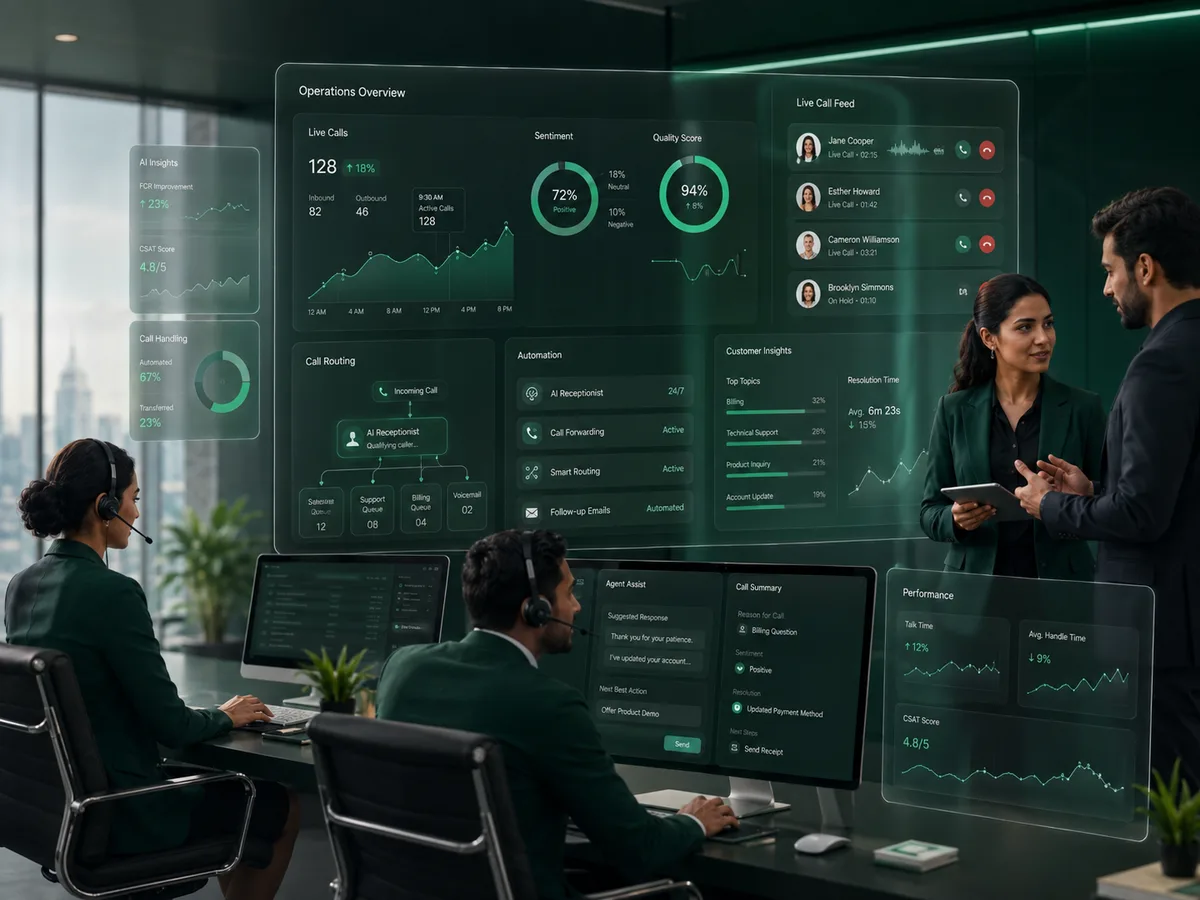
AI telephony focuses on using conversational intelligence to understand and act on phone interactions. Traditional call center software focuses more broadly on agent queues, workforce handling, and call-center operations. The two concepts can overlap rather than being mutually exclusive.
Why it matters
The goal is a better customer conversation that also moves the business toward a useful next action.
AI telephony automates conversation work
It can answer, understand intent, handle routine information, route, forward, and trigger supported actions.
Call center software organizes human operations
Traditional platforms commonly center on queues, agents, supervision, and operational call handling.
Hybrid workflows are practical
AI can handle the first line while people remain available for complex or valuable interactions.
Business actions matter
The usefulness of AI increases when the phone conversation can connect to scheduling and other authorized workflows.
How the workflow works
Start with the customer experience
Decide which interactions should be handled conversationally and which should reach a human quickly.
Define the operational model
Map branches, employees, routing, forwarding, and scheduling rules.
Use AI where it removes repetitive work
Automate predictable first-line tasks while preserving human handoff for exceptions and judgment-heavy conversations.
What AI telephony adds
The main change introduced by AI telephony is that the phone system can reason about the meaning of the conversation and choose a supported next action. That makes it possible to replace some fixed menus and repetitive agent steps with a conversational front layer.
For a business, the goal is not simply to generate speech. The value comes from combining natural interaction with reliable business information, routing rules, forwarding, scheduling, and other operational context.
- Conversational intent
- AI reception
- Automated qualification
- Routing and forwarding
- Calendar-connected scheduling
When a call center model still matters
Large teams may still need human-agent queues, specialist groups, supervision, quality processes, and workforce management. AI telephony can sit in front of or alongside that operating model rather than replacing every traditional call-center function.
Plus0 is positioned around AI Desk, AI Telephony, and AI Call Center workflows, giving organizations a way to use automation while keeping human teams part of the communication process.
- Human escalation
- Specialist teams
- Structured operations
- AI-first front line
Frequently asked questions
Is AI telephony the same as call center software?
No. AI telephony describes AI-driven phone interactions and actions. Call center software is a broader category that often includes human-agent and operational management features.
Can AI telephony be used with human teams?
Yes. Hybrid workflows are often the most practical approach, with AI handling repetitive first-line work and people handling complex cases.
Can Plus0 route calls to employees?
Yes. Routing and forwarding are part of the Plus0 communication workflow.
Can Plus0 schedule appointments during a call?
Yes, when an authorized calendar integration and supported scheduling configuration are enabled.
Related Plus0 pages
Explore the connected capabilities and guides behind the same communication workflow.
Bring AI into your business calls
Explore Plus0 AI reception, telephony, scheduling, and connected communication workflows.